


-
Estika utilizes advanced non-invasive methods, including specialized chemical peeling & precision techniques, to eliminate growths without surgery.
-
Skin tags often triggered by friction, hormonal shifts (like pregnancy) or insulin resistance, common among Malaysians.
-
Treatment focuses on breaking down the excess tissue at the stalk (peduncle) using controlled chemical or thermal energy.
-
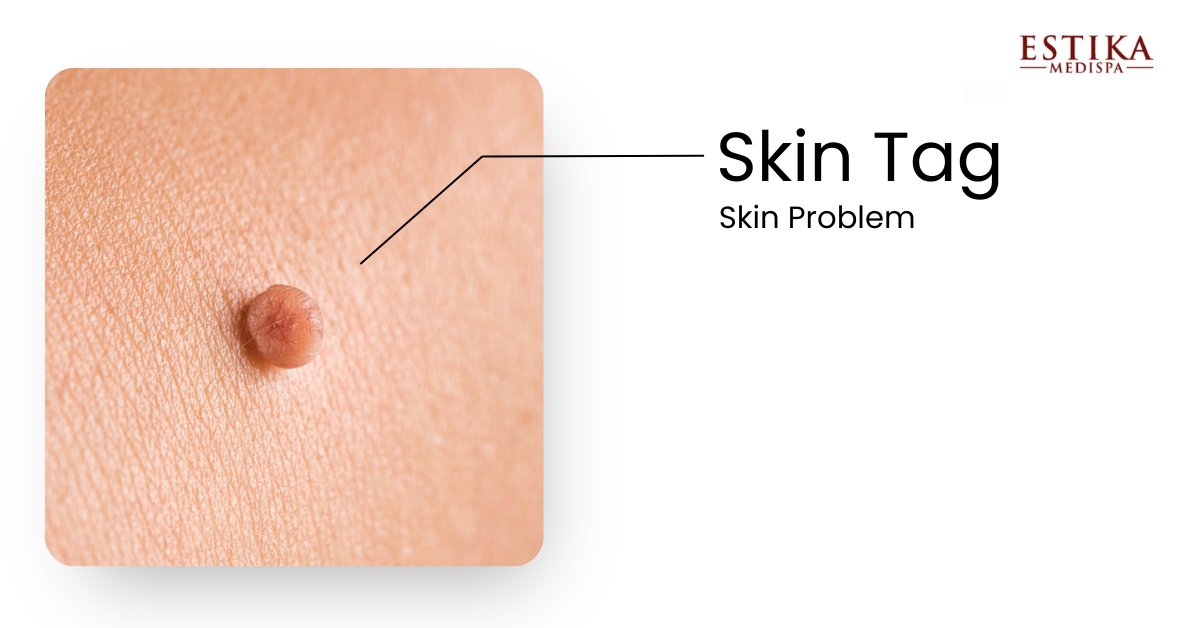
These are soft, flesh-colored or hyperpigmented protrusions known as acrochordons, often found on eyelids or neck.
-
Treatment is recommended when tags become inflamed, catch on jewelry/hijabs or cause aesthetic distress.
The Emotional Toll of Skin Tags: You Are Not Alone
We understand that waking up everyday to work and seeing a new bump on your eyelid or jawline can be incredibly frustrating.
For many Malaysian women, skin tags aren’t just “extra skin”, they feel like a barrier to feeling beautiful.
You might find yourself constantly adjusting your tudung to hide your neck, or feeling segan when people look closely at your face during a conversation.
If you’ve been feeling self-conscious or “rimas” with these growths, please know that you are not alone.
It is a very normal part of the skin’s journey, especially as we balance busy lives, motherhood, and the unique climate of our home.
At Estika, we don’t just see a skin problem; we see a person who deserves to feel confident in her own skin again.
Read : Hydra Facial for Acne Scars: Ideal Treatment for Pitted Skin
Understanding Skin Tags
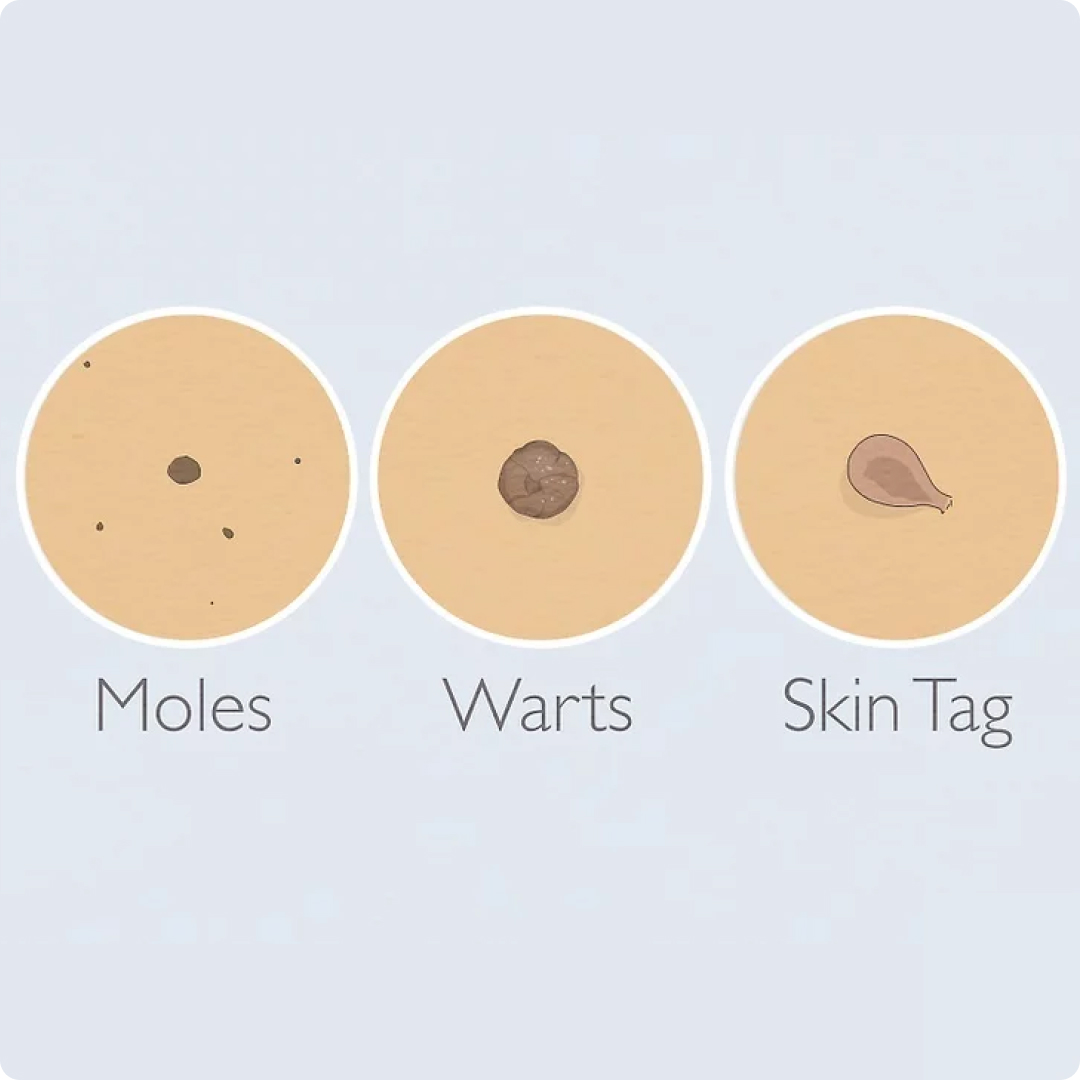
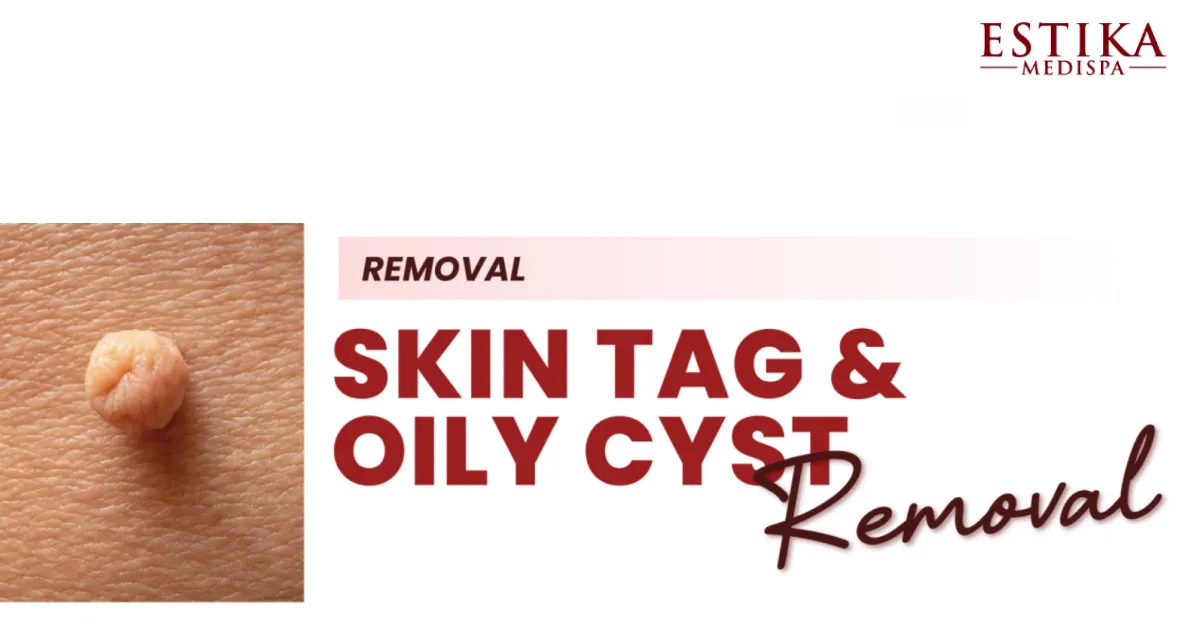
In Malaysia, we often mistake skin tags for “warts” or ketuat. Scientifically known as acrochordons, these are small, benign (non-cancerous) growths that hang off the skin. Unlike a mole that sits flat or slightly raised, a skin tag usually has a narrow stalk.
While they aren’t dangerous, having them on your face can really mess with your confidence and make your “makeup tak lekang” (makeup doesn’t sit smooth).
Skin Tag Root Cause
What actually causes these bits of skin to pop up? It’s usually a mix of:
- Genetics: If your parents had them, you likely will too.
-
Friction: Skin rubbing against skin. This is why they are common in the folds of the neck or eyelids.
-
Hormones: Many Malaysian women notice more skin tags during pregnancy due to hormonal surges.
-
Metabolic Factors: There is a strong link between skin tags and high insulin levels, common in our local community.
Symptoms of Skin Tags
Skin tags are generally painless. However, they can become a “problem” when:
-
They get snagged by your tudung pins or necklace.
-
They become twisted, turning red or black (thrombosed).
-
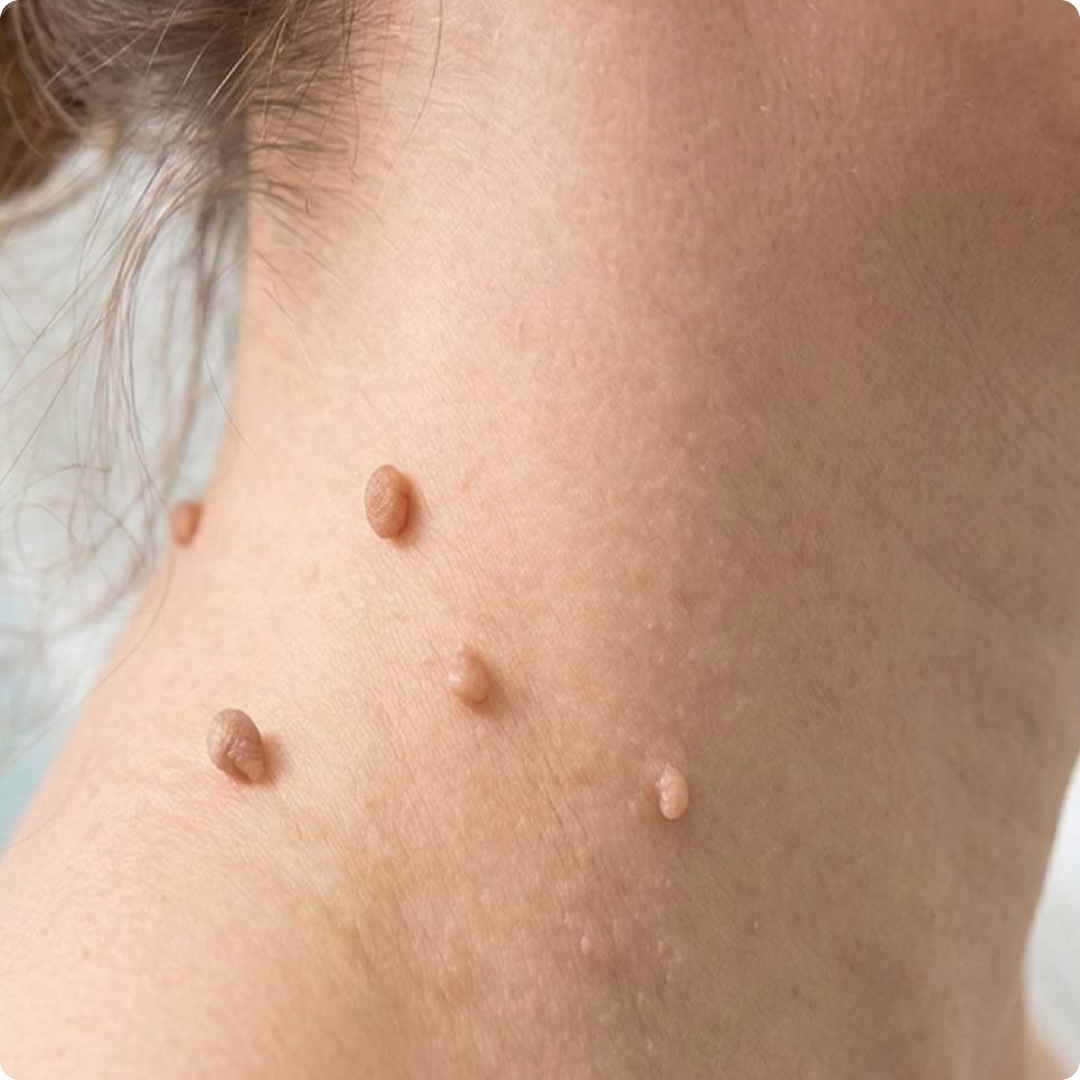
They grow in clusters on the face, making the skin look “dull” or “uneven.”
Progression of Skin Tags
They usually start as tiny, flesh-colored bumps. Over time, some stay the same size, while others grow larger. In our humid Malaysian weather, sweat can sometimes irritate the skin around the tag, leading to itching.
Skin Tag Myths vs Reality
-
Myth: Cutting them off with nail clippers at home is fine.
-
Reality: Tolong jangan. This leads to scarring, heavy bleeding, and nasty infections.
-
Myth: Skin tags are contagious.
-
Reality: No, unlike viral warts, skin tags do not spread from person to person.
-
Myth: “Ikat dengan benang” (tying with thread) is the best way.
-
Reality: This is painful and can cause the tissue to rot and turn dark.
Skin Tag Data
Peer-Reviewed Dermatology Data
According to the American Academy of Dermatology (AAD), nearly 50% of adults will develop a skin tag at some point. Research in JAMA Dermatology highlights that while benign, skin tags can sometimes mimic more serious conditions if they are dark and irregular.
Estika Clinical Observation
At Estika, we’ve observed that many Malaysian clients seeking skin tag removal for the face also struggle with related issues like dark spots or pigmentation. Often, the friction that causes the tag also causes post-inflammatory hyperpigmentation (PIH), requiring a holistic approach.
How We Assess Your Skin Tag
We don’t just “buang” (remove) everything. Our certified beauticians perform a thorough skin analysis to ensure the growth is indeed a skin tag and not a mole or a viral wart.
Read : Refresh Tired Face with Oxygen Therapy for Deep Hydration
Understanding Skin Tag Removal
1. Science Behind Skin Tag Removal
The goal is to destroy the tissue cells of the tag safely without damaging the surrounding healthy skin.
2. Skin Tag Removal Procedure
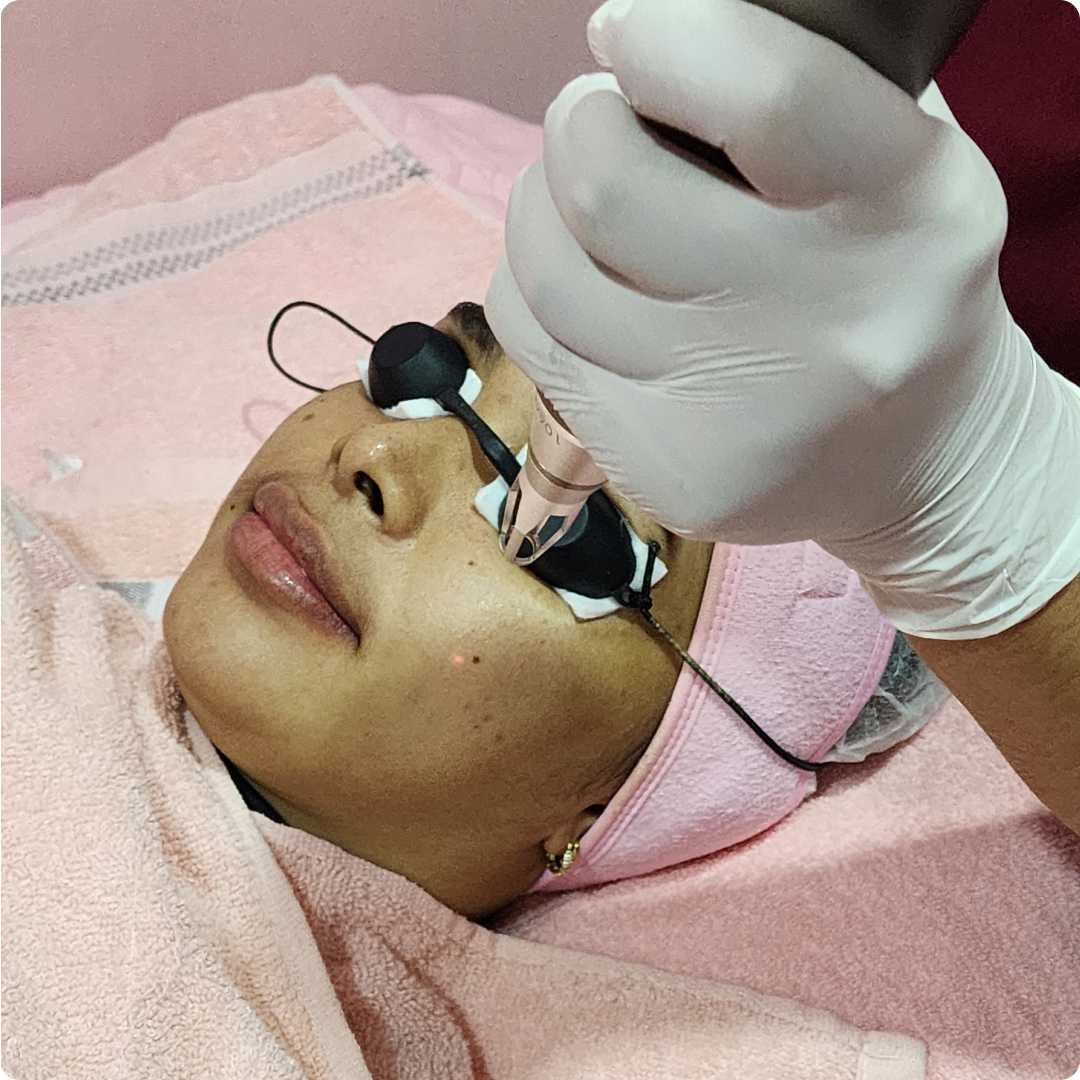
At Estika, we specialize in non-invasive skin solutions. Our primary method involves:
-
Targeted Chemical Peeling/Solutions: Applying professional-grade solutions that cauterize the tag safely.
-
Precision Technique: Our beauticians use specialized tools to ensure the removal is clean and the “root” is addressed.
3. Skin Tag Removal Downtime
Immediately after, you might see a tiny scab. This usually falls off within 5 to 7 days. Paling penting, don’t kopek (pick) the scab!
4. Skin Tag Removal Patient Comfort Scale
Most clients describe the feeling as a “semut gigit” (ant bite)—a tiny sting that lasts only a few seconds. No needles required!
5. Skin Tag Removal Results
Once the scab falls off, the skin texture is restored. No more bumps when you wash your face or apply foundation.
Skin Tag with Skin Tag Removal
Benefits For
-
Instant improvement in skin texture.
-
Prevents irritation from clothing.
-
Non-surgical, meaning no stitches.
Suitable For
-
Individuals with multiple small tags on the face or neck.
-
Those looking for a “clean” look before big events.
View Treatment : Skin Tag Removal
Our Certified Skin Therapists
Our team consists of trained beauticians with the credibility to handle facial skin. They understand the anatomy of the face to ensure that removal is safe and effective.
Advantages of Estika Solution
-
Non-Invasive Focus : We avoid aggressive cutting.
-
Clinical Standards : We follow strict hygiene protocols.
-
Holistic Care : We manage the “dull skin” & “uneven skin tone” that often accompanies it.
Skin Tag Explanation by Beautician
Treatment Journey for Skin Tag
-
Consultation
-
Preparation
-
Removal
-
Aftercare
-
Healing
When to Go For A Skin Tag Removal?
If your skin tag is or starts to changing color, bleeding, or just making you feel segan when meeting people, it’s time.
Skin Tag & Skin Tag Removal FAQ
1. Why choose Estika’s certified therapists?
Because the face is high-risk. Our therapists are trained to differentiate between a skin tag and more complex issues like skin tags vs. oily cysts.
2. Is the treatment effective for “biji kolesterol”?
Yes, our non-invasive methods are highly effective at clearing these bumps to smoothen the skin surface.
3. How to get an appointment?
Visit estika.com or WhatsApp us to book your appointment within 5 minutes.
Conclusion For Your Skin Tag
Always remember that, skin tags especially on the face area should be removed by professionals due to infection risk.
We at Estika want you to know that skin tags on the face are a very normal problem that many women out there experience. You don’t have to feel ashamed or inferior anymore. Whether you’re dealing with skin tags, oily cysts, or dull skin, there is a solution for everything.
At Estika Medispa, treatments are performed using medically guided protocols and skin analysis technology.
The decision to have skin tag removal for face is not just about external beauty, but about giving yourself the opportunity to feel more comfortable and confident every time you look in the mirror.
Our certified beauticians are ready to help you treat this problem with safe and effective non-invasive methods. Remember, clear and smooth skin is no longer a dream—it’s a reality that we can help you achieve with you.
References:
- DermNet, “Acrochordons (Skin Tags)”, (01-02-2024). https://dermnetnz.org/topics/skin-tag
- American Academy of Dermatology (AAD), “Skin Tags: Why they form and how to remove them”, (15-05-2023). https://www.aad.org/public/diseases/a-z/skin-tags
This content and clinical guide does not replace medical consultation. It has been reviewed and approved for medical accuracy by:
Dr. Abdul Haq Ab Wasa Founder of Estika Medispa
Registered Medical Practitioner with the Malaysian Medical Council (MMC No: 63574). All protocols at Estika Medispa adhere strictly to KKM (Ministry of Health Malaysia) regulations and ISO 9001:2015 Quality Management System guidelines to ensure patient safety and clinical excellence.