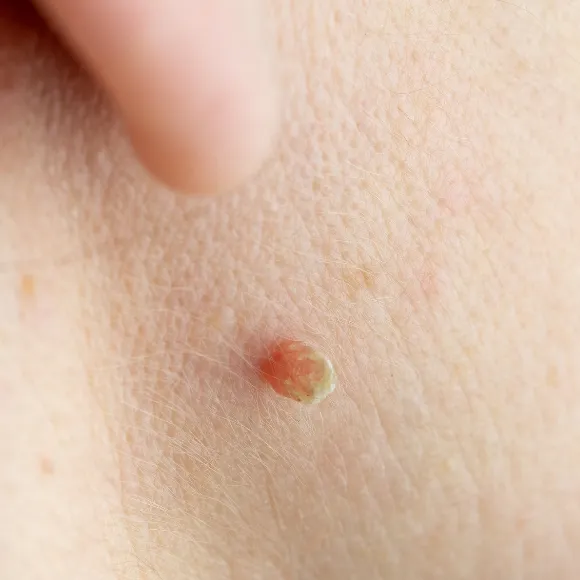
Remove Skin Tags Safely: Smooth, Clear Skin Without Scars
From small harmless growths to visible lumps that affect your confidence, our clinically proven removal techniques eliminate skin tags and oil cysts safely, precisely, and with minimal downtime across 37 branches nationwide.
Skin Tags (Acrochordons) and Oil Cysts (Sebaceous/Epidermoid Cysts) are common benign skin growths caused by friction, clogged pores, or trapped keratin beneath the skin. Skin tags usually appear as small, soft growths on areas like the neck, underarms, or eyelids, while oil cysts form as round lumps under the skin due to blocked sebaceous glands. At Estika Medispa, we use a Precision Removal Approach — targeting the root of the growth while protecting surrounding skin, ensuring safe removal with minimal discomfort and reduced risk of recurrence.
Data & Insights 2026
The Friction Factor: Skin tags are most commonly found in high-friction areas. Studies show they are 5x more likely to appear in skin folds like the neck and underarms.
Hormonal & Metabolic Link: Research indicates that individuals with insulin resistance or hormonal imbalance are more prone to developing multiple skin tags.
The “Don’t DIY” Risk: Over 60% of people attempt to remove skin tags at home, increasing the risk of infection, bleeding and scarring.
SYMPTOMS
Soft Hanging Growths
Small, flesh-colored or slightly darker growths attached to the skin by a thin stalk.
Lumps Under the Skin
Round, firm bumps (oil cysts) that may slowly grow over time.
Occasional Pain or Irritation
Especially when rubbed by clothing, jewelry, or shaving.
Visible Pore or Opening
Oil cysts may have a small central opening (punctum).
CAUSES
Skin Friction
Repeated rubbing in areas like neck folds, underarms, or groin.
Clogged Oil Glands
Blocked sebaceous glands leading to buildup under the skin.
Hormonal Changes
Common during pregnancy, weight gain, or metabolic imbalance.
Genetic Factors
Family history increases likelihood of developing multiple skin tags.
SHORT-TERM RISKS
Irritation & Bleeding: Skin tags can get caught and bleed easily.
Infection Risk: Especially if scratched, cut, or improperly removed.
Discomfort: Cysts may feel tender or painful when inflamed.
Cosmetic Concern: Visible growths can affect confidence, especially on face or neck.
LONG-TERM RISKS
Growth Enlargement: Cysts can increase in size if untreated.
Recurring Inflammation: Repeated swelling or infection over time.
Permanent Scarring (DIY Removal): Improper methods can damage surrounding skin.
Multiple Growth Development: New skin tags may continue to appear if root causes aren’t addressed.
TYPES OF SKIN TAG & CYST PROBLEMS
Skin Tags (Acrochordons)
Small, soft, hanging growths usually caused by friction.
01
Epidermoid Cysts
Keratin-filled lumps beneath the skin.
02
Sebaceous Cysts
Blocked oil glands forming slow-growing bumps.
03
Inflamed/Infected Cysts
Red, swollen, and sometimes painful due to bacterial infection.
04
Frequently Asked Questions
Quick answers to questions you may have
Can I remove skin tags at home?
DIY removal methods can cause bleeding, infection, and scarring. Professional removal ensures safe and complete treatment.
Are skin tags dangerous?
Skin tags are harmless, but should be checked if they change in size, color, or shape.
Will skin tags grow back after removal?
The same tag won’t grow back, but new ones may appear if underlying causes persist.
How many sessions are needed?
Most skin tags can be removed in a single session, while cysts may require assessment depending on size and condition.
Verified by the Estika Medispa Aesthetic Leadership Team
Direct WhatsApp support for appointments and queries
Medical Disclaimer:The information provided on estika.com is for educational purposes only and does not substitute professional medical advice, diagnosis, or treatment. Estika Medika’s protocols for acne skin and acne skin problems developed by certified aesthetic specialists in compliance with Malaysian healthcare standards. Individual results may vary based on hormonal and environmental factors.