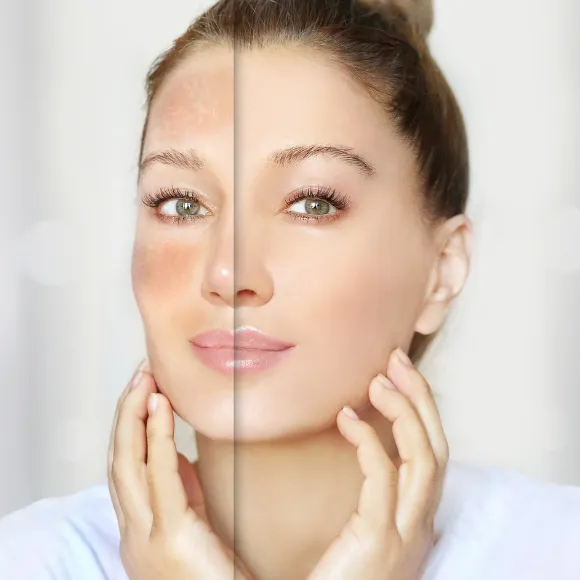
Uneven Skin Tone, or dyschromia, is characterized by irregular pigmentation and “blotchiness” that prevents the skin from looking clear and healthy. It is the result of disorganized melanin distribution and localized micro-inflammation. At Estika Medika, we utilize a Multi-Spectral Approach: calming inflammatory redness, breaking down localized pigment, and smoothing the skin surface to ensure uniform light reflection for that coveted “glass skin” effect.
Data & Insights 2026
The “Blotchy” Statistics: 2026 clinical surveys reveal that 65% of Malaysians identify uneven skin tone as their primary aesthetic concern, even above wrinkles.
Micro-Inflammation: Chronic exposure to urban smog (PM2.5) increases the risk of “mottled” skin tone by 25% due to constant low-grade skin stress.
Optical Reflection: Skin with an even tone reflects 40% more light than patchy skin, making it the most critical factor for a youthful appearance.
SYMPTOMS
Mottled Appearance
Areas of the face looking “patchy” or “dirty” without specific dark spots.
Persistent Redness (Erythema)
Blotchy red patches, often around the nose or cheeks.
Texture-Induced Shadows
Rough patches that create an illusion of darker skin in certain lighting.
Dullness & Sallowness
A yellowish or greyish undertone that breaks the skin’s natural clarity.
Perioral Shadows
Darkness specifically around the mouth or chin area.
CAUSES
Cumulative UV Exposure
Sun damage that creates a “stained” appearance across the forehead and cheeks.
Inflammaging
Age-related chronic inflammation that causes the skin to look “reddish-brown” and aged.
Post-Breakout Healing
Residual marks (PIE and PIH) that remain long after acne has cleared.
Environmental Pollutants
Heavy metals in urban dust that cause localized oxidative stress and discoloration.
Compromised Skin Barrier
A “leaky” barrier that allows irritants to cause patchy, reactive redness.
SHORT-TERM RISKS
Dependency on Foundation: The need for heavy “color-correcting” makeup which can further clog pores.
Heightened Sensitivity: Patchy skin often indicates localized inflammation that can lead to rashes.
Poor Product Absorption: Uneven skin texture often accompanies uneven tone, preventing serums from working effectively.
LONG-TERM RISKS
Permanent Dyschromia: If left untreated, temporary blotchiness can become permanent dermal “stains.”
Premature Aging Perception: Studies show that uneven skin tone can add 5 to 7 years to a person’s perceived age, even in the absence of wrinkles.
Barrier Exhaustion: Constant inflammation weakens the skin’s ability to defend against environmental DNA damage.
TYPES OF UNEVEN SKIN TONE PROBLEMS
Pigmentary Irregularity
Brownish patches caused by sun and hormones.
01
Vascular Blotchiness
Reddish patches caused by dilated capillaries or sensitivity.
02
Textural Unevenness
Rough skin that creates "micro-shadows," making the tone look muddy.
03
Sallow/Greyish Tone
Lack of healthy blood flow giving a "lifeless" appearance.
04
Frequently Asked Questions
Quick answers to questions you may have
Why is my skin tone uneven even if I don't have jeragat?
Unevenness isn’t just about dark spots. It can be caused by redness, dead skin buildup, or “shadowing” from rough texture. All these factors break the harmony of your skin tone.
Does diet affect skin tone?
Yes. A high-sugar diet leads to “Glycation,” which makes skin look yellowish and sallow. Antioxidant-rich foods help fight the oxidative stress that causes blotchiness.
Can "Brightening Serums" fix blotchy skin?
At Estika Medika, our philosophy is “Natural Enhancement.” We focus on bio-stimulating your own skin to repair itself, rather than over-filling, ensuring you look like a refreshed version of yourself.
How long does it take to see a "uniform" skin tone?
While some “Glow” treatments offer instant results, true tone correction typically takes 2 to 3 months, aligning with your skin’s natural renewal cycles.
Verified by the Estika Medispa Aesthetic Leadership Team
Direct WhatsApp support for appointments and queries
Medical Disclaimer:The information provided on estika.com is for educational purposes only and does not substitute professional medical advice, diagnosis, or treatment. Estika Medika’s protocols for acne skin and acne skin problems developed by certified aesthetic specialists in compliance with Malaysian healthcare standards. Individual results may vary based on hormonal and environmental factors.